
Your Path Through the World’s Financial Storm
The Pain: Feeling Adrift in a Global Economic Ocean
For most people, the foreign exchange market is an invisible force. Yet, it impacts everything: the cost of your imported car, the price of your next vacation, and the stability of your job in an export-driven company. The pain points are real and pervasive:
- Eroding Purchasing Power: Your hard-earned money sits in a bank account, but its real value is at the mercy of currency strength and inflation.
- Financial Passivity: You witness market-moving events (elections, pandemics, policy changes) but feel you can only react as a consumer, not an active participant.
- Information Overload: Headlines scream about dollar strength, euro crises, and yuan manipulation, creating noise without providing a clear map to understanding.
- Limited Avenues for Growth: Traditional investment routes can feel slow, gatekept, or disconnected from the real-time pulse of the global economy.
The Logic: Deconstructing the Forex Trader
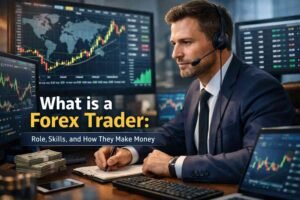
At its core, a forex trader is an individual or institution that buys and sells currencies on the foreign exchange (forex) market with the aim of generating profit. The market itself is a decentralized global marketplace where national currencies are traded 24 hours a day, five days a week. It’s the largest and most liquid financial market in the world.
What Does a Forex Trader Actually Do?
Forex traders speculate on the price movements of currency pairs. They buy a currency (go long) if they believe it will appreciate in value relative to the other currency in the pair, or sell it (go short) if they believe it will depreciate. The primary vehicle is the currency pair, quoted as, for example, EUR/USD (Euro vs. US Dollar).
| Trader Type | Time Horizon | Typical Method | Key Tools |
|---|---|---|---|
| Scalper | Seconds to Minutes | Exploiting tiny price gaps, high volume | Tick charts, Level 2 quotes, strict discipline |
| Day Trader | Minutes to Hours | Capitalizing on intraday volatility; no overnight positions | Technical analysis, 1-hour/15-min charts, news feeds |
| Swing Trader | Days to Weeks | Riding “swings,” or momentum, in a trend | Technical & fundamental analysis, 4-hour/daily charts |
| Position Trader | Months to Years | Focusing on long-term macroeconomic trends | Fundamental analysis, economic models, interest rate policies |
The Essential Toolkit of a Forex Trader
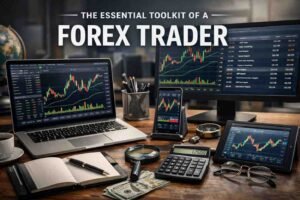
- Broker Platform: The gateway to the market (e.g., MetaTrader 4/5, cTrader).
- Analysis Methods:
- Technical Analysis: Studying price charts, patterns, and indicators (like moving averages and RSI) to forecast future movement.
- Fundamental Analysis: Analyzing economic data (GDP, employment, inflation), central bank policy, and geopolitical events.
- Risk Management: The non-negotiable discipline. This includes using stop-loss orders, proper position sizing, and never risking more than a small percentage of capital on a single trade.
The Emotion: The Thrill of Navigating the Storm
This is where the logic meets the human spirit. Being a forex trader isn’t just about numbers; it’s about the empowerment of engaging with the world on a different level. The emotional payoff is significant:
- Agency & Global Citizenship: You’re no longer a passive observer. A news event about the European Central Bank isn’t just news—it’s a variable in your analysis. You become a student of global interconnectedness.
- The Challenge of Mastery: Trading is a perpetual learning curve that tests and builds discipline, patience, and emotional control. The market is the ultimate teacher.
- Potential for Freedom: The 24-hour market, the ability to trade from anywhere with an internet connection, and the concept of profit from both rising and falling markets create a powerful allure of lifestyle flexibility.
- The Intellectual Puzzle: Successfully analyzing disparate pieces of information, a chart pattern, an interest rate decision, and a geopolitical tension to form a coherent thesis is deeply satisfying.
Conclusion
A forex trader plays a vital role in the global currency market by analyzing price movements, managing risk, and executing trades to profit from exchange rate fluctuations. Success in forex trading depends on developing strong analytical skills, emotional discipline, and a clear trading strategy supported by continuous learning. While forex trading offers significant profit potential, it also involves risk, making education, practice, and proper risk management essential for long-term success. Whether trading part-time or professionally, a well-informed forex trader is better positioned to navigate the market with confidence and consistency