
A cluttered entryway or hallway can make even the most beautiful home feel chaotic. A shoe cabinet is a simple yet effective solution, offering both storage and style. Beyond keeping shoes organized, it can serve as a subtle decor element that reflects your personality and sense of order.
Whether you live in a small apartment, manage a busy household, or have a large shoe collection, the right shoe cabinet can completely transform your space. This guide explores different types of cabinets, tips for choosing the perfect one, and practical ways to keep shoes neatly stored.
Why a Shoe Cabinet Matters
A dedicated shoe cabinet keeps your home tidy by providing a specific place for each pair, reducing clutter and making it easier to clean. It also protects shoes from dust, moisture, and accidental damage. Modern designs can enhance your decor, while vertical or multi-tier cabinets maximize storage in smaller areas. Most importantly, a well-organized cabinet allows quick access to your daily footwear and special-occasion shoes without the frustration of searching.
Types of Shoe Cabinets
Shoe cabinets come in a variety of designs, each suited to different spaces and needs. Single-tier cabinets are compact and ideal for narrow hallways or small apartments, usually holding around 5–10 pairs. Multi-tier units offer more storage, accommodating 20–30 pairs with adjustable shelves and a mix of open and closed compartments.
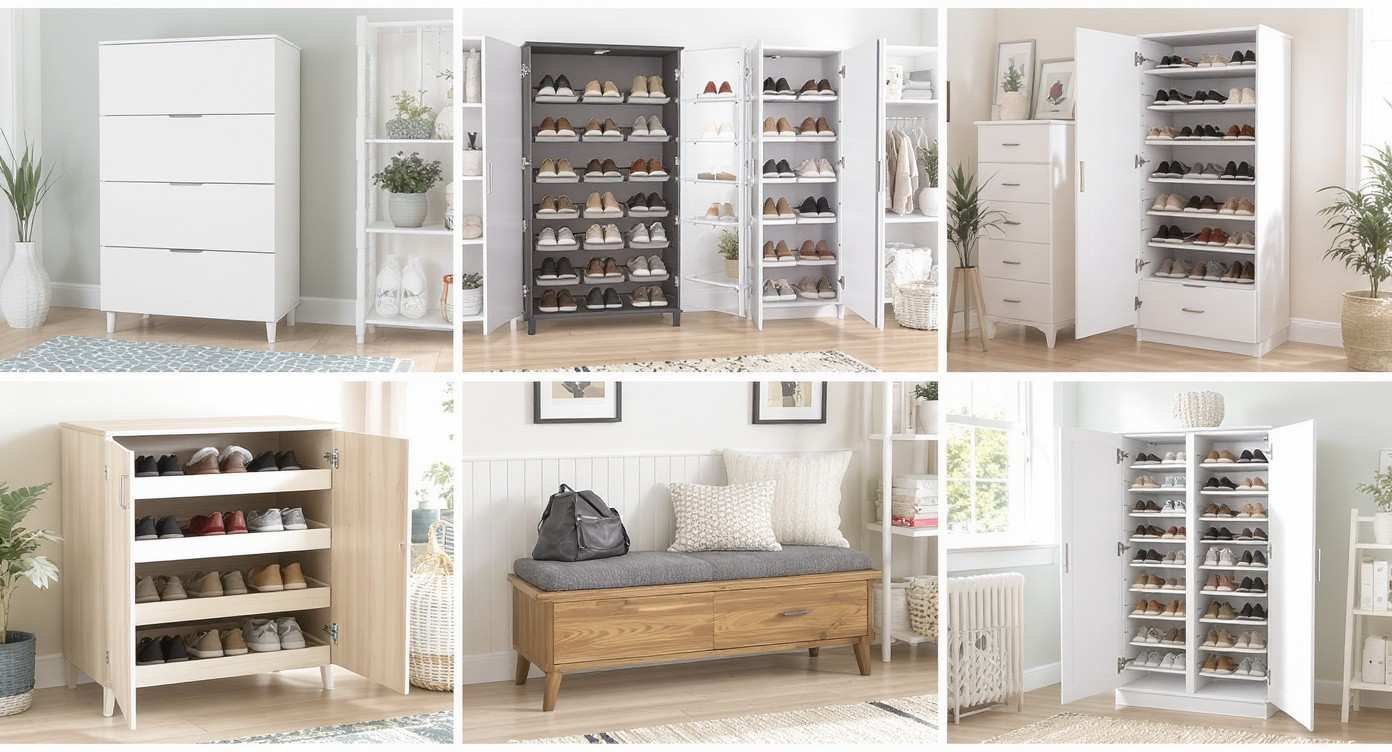
For apartments or rental spaces, over-the-door cabinets are a practical choice, saving floor space with slim compartments or clear pockets. Bench-style cabinets combine storage with seating, perfect for hallways or mudrooms. Rotating or carousel designs provide vertical storage, giving access to multiple pairs while taking up minimal space. There are also specialty options like pull-out drawers, under-bed storage, and glass-front cabinets for showcasing designer shoes while keeping them dust-free.
Choosing the Right Cabinet
Start by measuring your available space to ensure the cabinet fits without obstructing doors or walkways. Consider the number of shoes you own and allow room for future additions. Style matters too: sleek, minimalist cabinets suit modern interiors, rustic wood blends with traditional decor, and colorful designs can add a playful touch. Finally, set a budget, prioritizing quality and functionality. A durable, well-constructed cabinet protects your shoes and lasts for years.
Organizing Your Shoes
Separate seasonal shoes to make finding the right pair easier. Group sneakers, heels, boots, and formal shoes in dedicated areas, and consider labels or small compartments for family members to quickly find their shoes. Stack vertically, use tilt-out designs, or modular shelves to make the most of the space. For delicate or high-end shoes, use inserts, soft bags, or shoe trees, and make sure shoes are clean before storing. Proper airflow and the occasional deodorizer or desiccant help prevent odors and moisture buildup.
Why Choose Quality
Investing in a high-quality cabinet pays off in the long run. Durable cabinets resist warping and wear, while smooth surfaces are easy to maintain. Adjustable shelves accommodate shoes of all sizes, including tall boots. A polished, organized entryway makes a positive impression on guests and encourages a clutter-free lifestyle. Beyond aesthetics, a well-designed cabinet saves time, keeps shoes in good condition, and brings order to your daily routine.
Summary
A shoe cabinet is more than just storage—it’s a way to protect footwear, reduce clutter, and enhance your home’s style. From single-tier units for small spaces to multi-tier, bench-style, over-the-door, rotating, and specialty cabinets, there’s a solution for every home. Choosing the right cabinet requires considering space, shoe collection size, style, and budget, while effective organization involves separating seasonal shoes, grouping by type, and maintaining airflow. A well-chosen cabinet makes shoe storage efficient, stylish, and long-lasting.
What are other names for a shoe cabinet?
A shoe cabinet can also be called a shoe rack, a footwear organizer, or a shoe storage unit. All refer to furniture designed to store and organize shoes neatly.
How do I choose the right shoe cabinet?
Consider your available space, number of shoes, home style, and budget. Make sure it’s functional, durable, and fits your décor.
Does a shoe cabinet need ventilation?
Yes, proper airflow helps prevent moisture, mold, and unpleasant odors. Ventilation keeps shoes fresh and extends their lifespan.
What is a shoe cabinet?
It’s a piece of furniture used to store, organize, and protect shoes. It also helps keep your home tidy and can enhance interior style.