
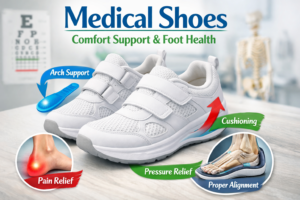
Comfort That Supports Your Health Every Step of the Way
Foot pain has a way of quietly affecting everything. From how long you can stand to how far you can walk, uncomfortable footwear can slowly drain your energy and confidence. This is where medical shoes make a real difference. Designed with health, comfort, and support in mind, medical shoes are not just for people with foot conditions; they are for anyone who wants to protect their feet and improve overall well-being.
Medical shoes are thoughtfully engineered to reduce pressure, support natural movement, and prevent common foot problems. Unlike regular fashion footwear, they focus on how your feet function throughout the day. Whether you spend long hours standing, suffer from foot pain, or simply want better comfort, shoes offer a practical and long-lasting solution.
What Are Medical Shoes?
shoes are specialized footwear designed to support foot health and improve comfort during daily activities. They are often recommended by podiatrists and healthcare professionals for people with foot conditions, posture issues, or chronic discomfort. However, their benefits go far beyond medical needs.
These shoes are built using ergonomic designs that align the foot properly, reduce stress on joints, and distribute body weight evenly. Soft interiors, cushioned soles, and supportive structures help reduce pain and fatigue, making walking and standing much easier.
Why Shoes Are Important for Foot Health
Feet carry the full weight of the body, yet they are often neglected when choosing shoes. Poor footwear can lead to issues such as heel pain, knee discomfort, back problems, and even balance issues. shoes address these concerns by offering structured support where it matters most.
One of the biggest advantages of shoes is pressure relief. Fins Beach Oman 2026 They reduce stress on sensitive areas of the foot, helping prevent corns, calluses, and inflammation. This makes them especially beneficial for people who experience daily discomfort or have existing foot conditions.
Who Should Wear Shoes?
Shoes are suitable for a wide range of people. While they are commonly associated with older adults or those with medical conditions, many younger individuals also benefit from wearing them.
People who stand for long hours, such as healthcare workers, teachers, and retail staff, often experience foot fatigue. shoes help reduce this strain and improve overall comfort. Individuals recovering from injuries or dealing with posture-related pain also find shoes extremely helpful.
Key Features That Define Quality Shoes
shoes are carefully designed with features that prioritize comfort and stability. Each element plays a role in supporting foot health and improving movement.
-
Cushioned insoles that absorb shock and reduce pressure
-
Arch support that promotes proper foot alignment
-
Wide toe boxes to prevent crowding and discomfort
-
Non-slip soles for better balance and safety
Types of Shoes Available
shoes come in various styles to meet different needs and preferences. They are no longer limited to basic or unattractive designs. Modern shoes combine function with style, making them suitable for everyday wear.
Shoes for Daily Walking
Walking shoes are lightweight and flexible, allowing natural movement while providing excellent support. They are ideal for daily errands, casual outings, and regular use.
Shoes for Work
Work-focused shoes are designed for people who stand or walk for extended periods. They offer enhanced cushioning and durable soles to reduce fatigue during long shifts.
Orthopedic Shoes
Orthopedic shoes are designed for individuals with specific foot conditions. They offer additional depth and customizable support to accommodate inserts or orthotics.
Shoes and Common Foot Conditions
Shoes are often recommended for managing various foot-related issues. They help reduce pain and prevent further complications when used consistently.
People with plantar fasciitis benefit from the arch support and heel cushioning provided by shoes. Those with flat feet experience improved alignment and reduced strain. Shoes are also helpful for people with arthritis, as they reduce joint pressure and improve stability.
Comfort vs. Style: Do Shoes Offer Both?
A common misconception is that shoes sacrifice style for comfort. Today, this is no longer true. Many brands now design shoes that look modern, clean, and suitable for different outfits.
From casual sneakers to formal-looking shoes, medical footwear has evolved to match everyday fashion needs. This means you no longer have to choose between looking good and feeling comfortable.
How Shoes Improve Posture and Balance
Posture starts from the ground up. When your feet are properly supported, your body naturally aligns better. Shoes help distribute weight evenly, reducing stress on knees, hips, and lower back.
Better balance is another major benefit. The stable soles and structured design of shoes reduce the risk of slips and falls, especially for older adults or people with mobility issues.
Choosing the Right Shoes
Selecting the right pair of shoes depends on your lifestyle and specific needs. Consider how often you walk, stand, or move throughout the day. Foot shape, arch type, and any existing conditions should also be taken into account.
Trying shoes later in the day can help ensure a better fit, as feet naturally expand. When shopping online, reviewing size charts and customer feedback is essential.
Where to Buy Reliable Shoes
Purchasing medical shoes from trusted retailers ensures quality and authenticity. Reputable sellers provide detailed product information, size guidance, and return options.
For more guidance on selecting supportive footwear, you can explore our detailed footwear comfort and support guide.
Caring for Your Medical Shoes
Proper care helps maintain the performance and comfort of medical shoes. Regular cleaning removes dirt and prevents material damage. Allowing shoes to air dry naturally preserves cushioning and shape.
Storing shoes in a cool, dry place and rotating pairs when possible also extends their lifespan. With good care, medical shoes can remain comfortable and supportive for years.
Medical Shoes for Long-Term Health Benefits
Wearing medical shoes consistently can have long-term benefits. Reduced foot pain leads to improved mobility, better posture, and increased confidence in daily activities. Over time, this positively impacts overall quality of life.
Medical Shoes and Everyday Lifestyle
Medical shoes fit seamlessly into modern lifestyles. Whether you’re going to work, running errands, or enjoying a walk, they provide comfort without drawing attention. Their subtle design makes them easy to pair with casual and professional outfits.
As awareness of foot health grows, more people are choosing medical shoes as part of their everyday wardrobe—not just for treatment, but for prevention.
(FAQs)?
1. Are medical shoes only for people with foot problems?
No, medical shoes are beneficial for anyone who wants better comfort, support, and foot health.
2. Can medical shoes be worn all day?
Yes, medical shoes are designed for all-day wear and help reduce fatigue and discomfort.
3. Do medical shoes look different from regular shoes?
Modern medical shoes are stylish and often look similar to regular casual or work shoes.
4. Are medical shoes suitable for standing jobs?
Absolutely. Medical shoes are ideal for jobs that require long hours of standing or walking.
5. How long do medical shoes last?
With proper care, medical shoes can last several years while maintaining comfort and support.
Final Thoughts
Medical Shoes are more than just supportive footwear they are an investment in your health and daily comfort. Designed to reduce pain, improve posture, and enhance mobility, they provide benefits that extend far beyond the feet.
Whether you are dealing with discomfort or simply want to prevent future problems, choosing medical shoes is a smart and proactive decision. With the right pair, every step feels easier, more stable, and more confident—helping you move through life with comfort and care.